Trezor Login: Complete Guide for Safe and Secure Cryptocurrency Access
Accessing your cryptocurrency securely is the foundation of safe digital asset management. Whether you are new to crypto or already familiar with exchanges, understanding Trezor Login is essential. Trezor Login is not just about connecting your wallet—it ensures that every transaction you authorize is safe from hackers, phishing, and malware.
In this comprehensive guide, we will cover everything from setting up your Trezor device to advanced login strategies, tips for beginners and intermediate users, and frequently asked questions about Trezor Login. By the end, you’ll have complete confidence managing your crypto securely.
What is Trezor Login?
Trezor Login is the process of accessing your Trezor wallet through your device and Trezor Suite. Unlike online wallets, Trezor keeps your private keys offline, meaning that even if your computer is compromised, your funds remain secure. Every login requires authentication using a PIN and optionally a passphrase, combining convenience with high-level security.
Why Login Security Matters
Cryptocurrency transactions are irreversible. If someone gains access to your wallet, they can transfer funds permanently. Trezor Login ensures that:
- Only authorized users can access the wallet.
- Physical confirmation is required for every transaction.
- Even if your computer is hacked, the attacker cannot access your private keys.
Common Misunderstandings
Many beginners confuse Trezor Login with logging into an exchange account. Unlike an online platform, Trezor Login is a combination of hardware authentication and software interface. Without the physical device, no one can access your wallet—even if they have your Trezor Suite installed.
Step-by-Step Guide to Trezor Login
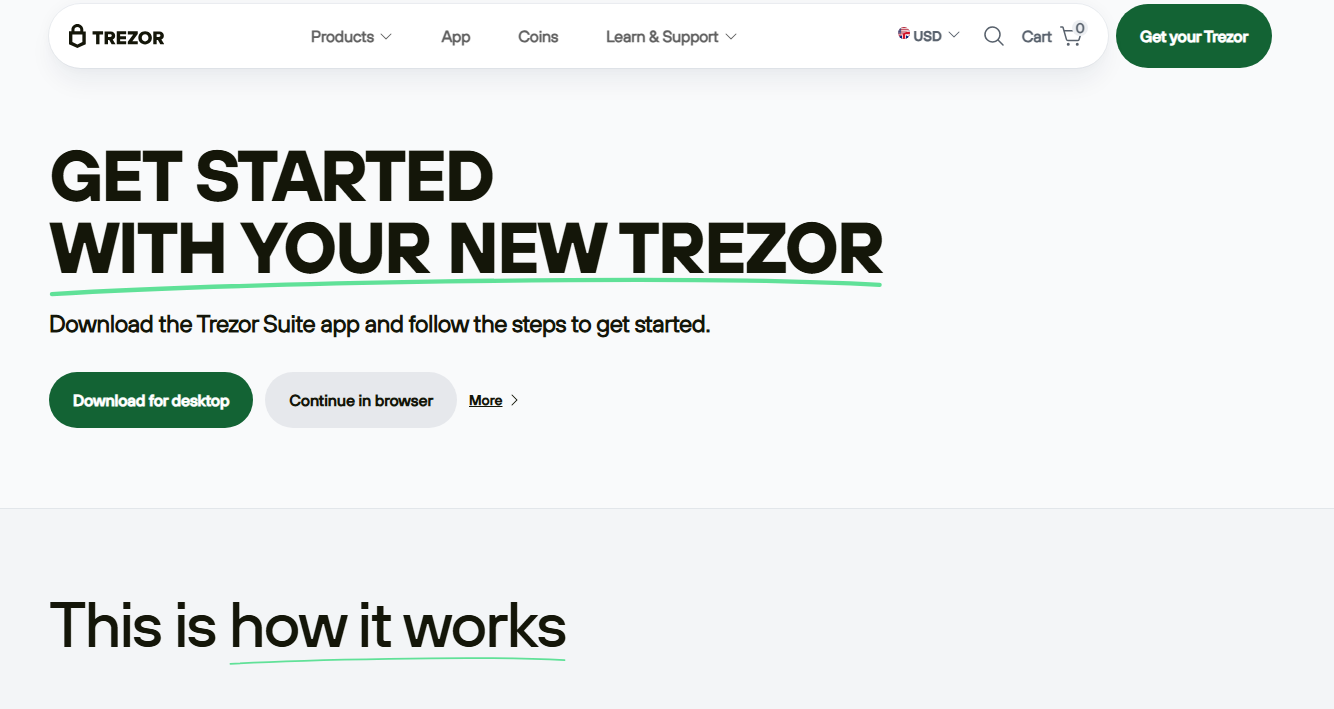
Getting started with Trezor Login is straightforward when you follow official instructions. Begin by visiting Trezor.io/start to install Trezor Suite and initialize your device.
Step 1: Connect Your Trezor Device
Plug your Trezor hardware wallet into a secure computer using the USB cable. Open Trezor Suite and click “Connect Device” to begin login setup. This physical connection is the first step in secure access.
Step 2: Enter Your PIN
Your PIN is required for every login. Trezor randomizes the keypad to prevent keylogging or observation attacks. Even if someone watches your screen, your PIN remains safe.
Step 3: Optional Passphrase
For extra security, you can enable a passphrase. This creates a hidden wallet that cannot be accessed without the correct passphrase, providing an additional layer of protection.
Step 4: Access Wallet Features
Once authenticated, you can view your portfolio, send and receive coins, and manage multiple wallets within Trezor Suite. Every transaction requires confirmation on your device, ensuring that your funds remain secure.
Using Trezor Suite for Login Management
Trezor Suite serves as the central interface for Trezor Login. It provides a clear overview of your holdings, transaction history, and wallet settings. Beginners find it intuitive, while intermediate users can explore advanced features safely.
Key Features
- Portfolio overview for all cryptocurrencies
- Transaction history tracking
- Wallet creation and management
- Security settings like PIN change, passphrase, and firmware updates
Why Following Official Guides is Crucial
Using official instructions from Trezor.io/start ensures that you avoid phishing websites or fake login portals. The setup guides reduce the risk of mistakes that could compromise your wallet.
Security Best Practices for Trezor Login
Even the most secure device requires safe habits. Here’s how to maximize Trezor Login security:
1. Protect Your Recovery Seed
Store the 24-word recovery seed offline in a safe location. Metal backups or fireproof safes are recommended. Never store your seed digitally.
2. Strong PIN Codes
Choose a complex PIN and avoid predictable numbers. Trezor randomizes the keypad to strengthen login security.
3. Enable Passphrases for Hidden Wallets
Adding a passphrase creates a hidden wallet accessible only with the correct passphrase, adding another security layer.
4. Update Firmware Regularly
Keeping your device firmware updated ensures that you benefit from security patches and enhanced features.
5. Avoid Phishing and Suspicious Links
Always access your wallet through verified channels, such as Trezor Suite or official URLs. Never share your PIN or recovery seed with anyone.
Advanced Tips for Intermediate Users
Once you understand basic login procedures, Trezor offers features to enhance portfolio management and security:
Passphrase-Protected Wallets
Create multiple wallets with unique passphrases. Each passphrase generates a separate wallet, improving privacy and security.
Custom Transaction Fees
Set manual fees for Bitcoin or Ethereum to optimize cost and transaction speed. This is particularly useful during network congestion.
DeFi and Web3 Integration
Connect your Trezor to decentralized finance applications safely. Interact with smart contracts, stake, and trade without exposing your private keys online.
Portfolio Diversification
Manage hundreds of cryptocurrencies on a single Trezor device. Diversifying reduces risk and simplifies overall management.
Common Trezor Login Scenarios
Understanding real-world scenarios can help users navigate login securely:
Logging in from Multiple Devices
You can use Trezor Suite on multiple computers, but the device itself must be physically connected for each login. This ensures that remote access alone is not enough to compromise funds.
Recovering from a Lost Device
If your Trezor is lost or stolen, use your 24-word recovery seed to restore access on a new device. Never attempt to recover using online tools, as these may be fraudulent.
Shared Wallet Access
Trezor Login supports multi-wallet setups with separate passphrases. This is useful for managing joint or business accounts while keeping funds secure.
Frequently Asked Questions (FAQ)
1. What is Trezor Login?
Trezor Login is the secure authentication process for accessing your hardware wallet using the device and Trezor Suite. It combines PIN entry, optional passphrase, and physical confirmation.
2. Can I log in without my Trezor device?
No. The physical device is required for authentication, ensuring that even if your computer is compromised, your wallet remains secure.
3. How do I recover my wallet if I forget my PIN?
Use your 24-word recovery seed to restore the wallet on a new Trezor device. Keep the seed secure to prevent permanent loss of funds.
4. Can I manage multiple wallets?
Yes. Trezor allows multiple wallets with different passphrases. Each wallet is isolated and secured by Trezor Login.
5. How do I avoid phishing attacks?
Always use official Trezor Suite or verified URLs. Never share your PIN or recovery seed, and double-check URLs before logging in.
6. Is Trezor Login beginner-friendly?
Yes. Trezor Login is designed to guide beginners step by step while providing advanced features for intermediate users.